How to Connect to Any WiFi Network Safely: A Complete Beginner’s Guide

How to Connect to Any WiFi Network Safely: A Complete Beginner’s Guide

Connecting to a WiFi network is one of the first things most people do after buying a new smartphone, laptop, tablet, or computer. A good WiFi connection helps you browse websites, watch YouTube videos, use social media, download apps, attend online classes, play games, and work from home. Today, almost every home, office, school, and public place provides WiFi access. However, many people still do not know the correct way to connect to a WiFi network or solve common WiFi problems.

In this complete guide, you will learn how to connect to any WiFi network safely on different devices. You will also understand common connection problems, simple solutions, and useful security tips. This article uses simple English, provides accurate information, and follows Google AdSense-friendly guidelines.

What is WiFi?

WiFi is a wireless technology that allows electronic devices to connect to the internet without using cables. A WiFi router sends wireless signals that nearby devices can receive. When your smartphone or laptop connects to these signals, you can access the internet from almost anywhere within the router’s range.

Unlike mobile data, WiFi usually offers faster internet speeds and does not consume your mobile data package. That is why many people prefer using WiFi whenever it is available.

Things You Need Before Connecting

Before connecting to any WiFi network, make sure you have the following:

  • A smartphone, laptop, tablet, or desktop computer.
  • WiFi turned on in your device settings.
  • The correct WiFi network name (SSID).
  • The correct WiFi password if the network is protected.
  • A router with an active internet connection.

If one of these requirements is missing, your device may not connect successfully.

How to Connect to WiFi on an Android Phone

Android smartphones from Samsung, Xiaomi, Vivo, Oppo, Realme, Motorola, and other brands follow almost the same steps.

Step 1: Open Settings

Unlock your phone and open the Settings application.

Step 2: Turn On WiFi

Tap WiFi or Network & Internet, then switch WiFi on.

Step 3: Wait for Available Networks

Your phone will automatically search for nearby wireless networks.

Step 4: Select Your WiFi

Tap the WiFi name you want to connect to.

Step 5: Enter the Password

Type the correct password carefully. Passwords are case-sensitive, so check capital and small letters.

Step 6: Connect

Tap Connect. If the password is correct, your phone will join the WiFi network within a few seconds.

How to Connect to WiFi on an iPhone

Apple devices also make WiFi connections very simple.

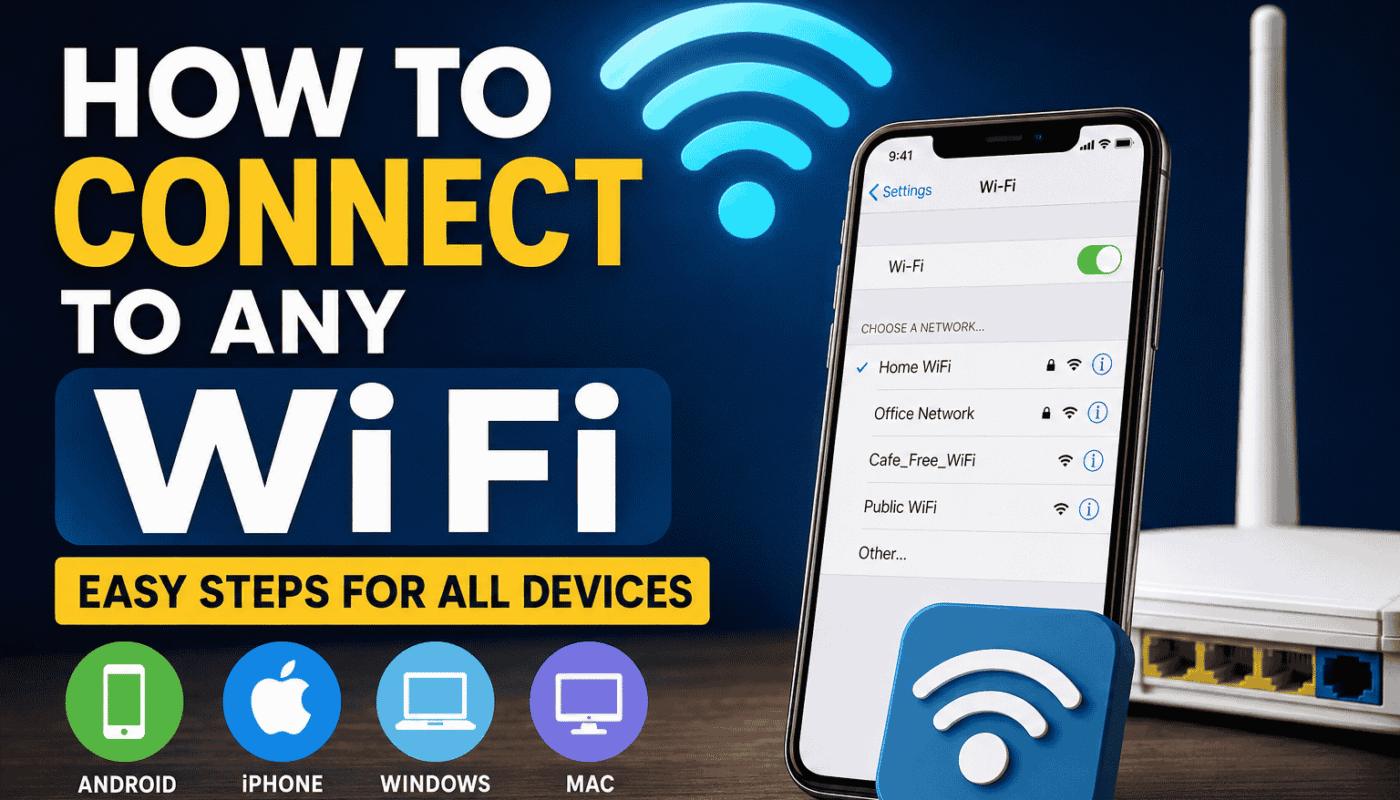
  1. Open Settings.
  2. Tap WiFi.
  3. Turn WiFi on.
  4. Choose your preferred network.
  5. Enter the password.
  6. Tap Join.

After a successful connection, a checkmark appears beside the network name.

How to Connect to WiFi on a Windows Laptop

Most Windows laptops use similar steps.

  1. Click the WiFi icon in the bottom-right corner.
  2. Turn WiFi on if it is disabled.
  3. Select the network you want to use.
  4. Click Connect.
  5. Enter the password.
  6. Press Next.

You can also select Connect Automatically so your laptop reconnects whenever the network is available.

How to Connect to WiFi on a Mac

Mac users can connect by following these steps.

  1. Click the WiFi icon in the menu bar.
  2. Select the available WiFi network.
  3. Enter the password.
  4. Click Join.

Your Mac will save the network for future use if you choose to remember it.

How Public WiFi Works

Many public places provide free WiFi for visitors. These include:

  • Airports
  • Hotels
  • Restaurants
  • Shopping malls
  • Libraries
  • Coffee shops
  • Universities

Sometimes you can connect immediately. In other cases, a webpage opens where you must accept the terms and conditions before internet access starts.

Public WiFi is convenient, but you should avoid entering sensitive information like banking passwords while connected to an unknown network.

Common Reasons Why WiFi Does Not Connect

Many users think their phone has a problem when the WiFi refuses to connect. In reality, the issue is often simple.

Here are the most common reasons:

  • Wrong password entered.
  • The router is switched off.
  • Internet service is temporarily unavailable.
  • Weak WiFi signal.
  • Too many connected devices.
  • Device software needs updating.
  • Airplane Mode is enabled.
  • The router requires restarting.

Checking these problems usually helps restore the connection quickly.

Simple Ways to Fix WiFi Problems

If your WiFi is not working, try these easy solutions.

Restart Your Device

A simple restart can solve temporary software issues.

Restart the Router

Turn the router off, wait about 30 seconds, then turn it back on.

Forget the WiFi Network

Delete the saved WiFi profile and reconnect using the password again.

Move Closer to the Router

Distance and walls reduce signal strength.

Check Internet Service

Sometimes the router works correctly, but your internet provider is facing an outage.

Update Your Device

Installing software updates often fixes WiFi compatibility issues.

How to Improve Your WiFi Speed

Sometimes your device connects to WiFi, but the internet feels slow. This does not always mean there is a problem with your internet provider. In many cases, a few simple changes can improve your WiFi speed.

Here are some useful tips:

  • Place your WiFi router in the center of your home.
  • Keep the router away from thick walls and metal objects.
  • Restart the router once every few weeks.
  • Disconnect devices that are not being used.
  • Keep your router software (firmware) updated.
  • Update your phone or laptop regularly.
  • Use the 5GHz WiFi band if your router supports it.
  • Avoid downloading large files on multiple devices at the same time.

These small steps can make your internet connection faster and more stable.

WiFi Safety Tips Everyone Should Follow

Connecting to WiFi is easy, but staying safe online is just as important. Cybercriminals sometimes create fake WiFi networks to steal personal information. That is why you should always be careful before connecting.

Follow these simple safety tips:

  • Only connect to WiFi networks you trust.
  • Never share your WiFi password with strangers.
  • Use strong passwords for your home WiFi network.
  • Keep your antivirus software updated.
  • Visit websites that use HTTPS for secure browsing.
  • Turn off automatic WiFi connections when you are outside your home.
  • Avoid logging into banking or payment websites on public WiFi.
  • Sign out of important accounts after using the public internet.

Following these habits helps protect your personal information and keeps your device secure.

Can You Connect to Any WiFi Without a Password?

Many people search online for ways to connect to any WiFi without knowing the password. The simple answer is No.

A password-protected WiFi network is designed to keep unauthorized users out. Connecting to someone else’s protected WiFi without permission is not only unethical but may also be against the law in many places.

If you need access to a WiFi network, you should:

  • Ask the owner for permission.
  • Use the correct password.
  • Scan a WiFi QR code if the owner shares one.
  • Use the approved sharing features available on some smartphones.

Always respect other people’s privacy and network security.

How to Connect Using a WiFi QR Code

Many modern Android phones and iPhones support WiFi QR codes.

To connect:

  1. Open your phone’s camera or QR scanner.
  2. Scan the WiFi QR code.
  3. A message will appear asking if you want to join the network.
  4. Tap Connect.

This method is quick and avoids typing long passwords manually.

Why Does WiFi Keep Disconnecting?

If your WiFi disconnects again and again, several reasons could be responsible.

Common causes include:

  • Weak signal strength.
  • Router overheating.
  • Too many connected devices.
  • Outdated router firmware.
  • Device software bugs.
  • Network interference from nearby electronics.

Restarting both your router and device often fixes temporary issues. If the problem continues, contacting your internet service provider may be the best solution.

Difference Between WiFi and Mobile Data

Many beginners confuse WiFi with mobile data, but they work differently.

WiFi

  • Uses a wireless router.
  • Usually faster.
  • Does not use your mobile data package.
  • Works only within the router’s coverage area.

Mobile Data

  • Uses your mobile network.
  • Works almost anywhere with signal coverage.
  • Uses your data plan.
  • Speed depends on your mobile network.

Whenever possible, using a trusted WiFi connection can help save mobile data.

Frequently Asked Questions

Why is my WiFi connected but there is no internet?

This usually means your device is connected to the router, but the router is not connected to the internet. Restart the router and check with your internet provider if the issue continues.

Why can’t my phone find my WiFi network?

Your router may be turned off, out of range, or temporarily hidden. Move closer to the router and refresh the WiFi list.

Can I connect two devices to the same WiFi?

Yes. Most home routers support multiple connected devices at the same time.

Is public WiFi safe?

Public WiFi is useful, but it is not always secure. Avoid entering passwords, banking information, or other sensitive data while using an unknown public network.

Should I leave WiFi turned on all the time?

Keeping WiFi on is generally fine, especially for home use. However, turning it off when you are not using it can save a small amount of battery life and prevent automatic connections to unknown networks.

Common WiFi Mistakes to Avoid

Many people make simple mistakes that prevent successful WiFi connections.

Avoid these common errors:

  • Typing the wrong password.
  • Standing too far from the router.
  • Ignoring software updates.
  • Connecting to unknown WiFi networks.
  • Sharing your WiFi password publicly.
  • Forgetting to restart the router when problems occur.

Learning these basics can save time and reduce frustration.

Final Thoughts

Connecting to a WiFi network is one of the most important skills for using modern devices. Whether you are using an Android phone, iPhone, Windows laptop, or Mac, the process is simple when you know the correct steps. Always make sure you have the correct password, keep your software updated, and follow good online safety practices.

If your WiFi does not work, do not panic. Most connection problems can be solved by restarting your device, checking the password, moving closer to the router, or restarting the router itself. These simple solutions fix many common issues without requiring technical knowledge.

Finally, remember to use WiFi responsibly. Only connect to networks you have permission to use, protect your personal information, and avoid unsafe public networks whenever possible. By following the tips in this guide, you can enjoy a fast, stable, and secure internet experience on all of your devices.

Leave a Reply

Your email address will not be published. Required fields are marked *